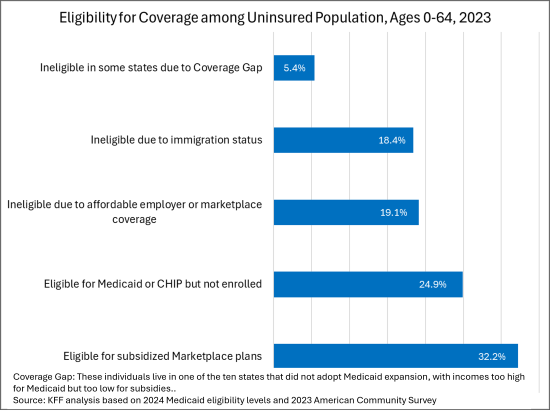
A universal healthcare system could be established in the U.S. by leveraging existing structures like Medicare, Medicaid, and the insurance industry, using a range of provider and consumer incentives to control costs. Our current system already covers around 92% of the U.S. population under age 65 - only 8% to go!. That seems eminently doable, especially considering that over half the currently uninsured are actually eligible for healthcare coverage but simply have not enrolled in a government program. The rest are ineligible for government assistance, mostly due to immigration status or affordable alternatives given their income. Here’s the breakdown:
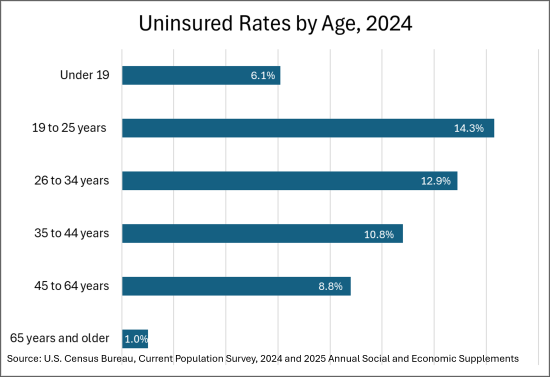
Young adults have the highest uninsured rates:
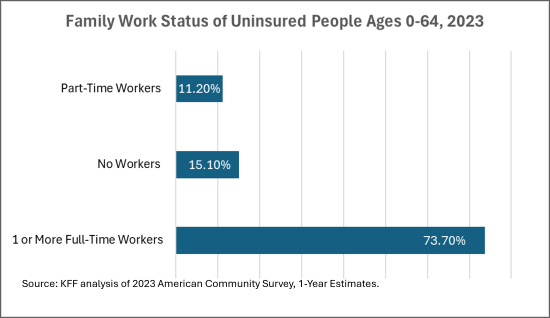
Most of the uninsured belong to families with at least full-time worker:
But many employers don’t offer health benefits:
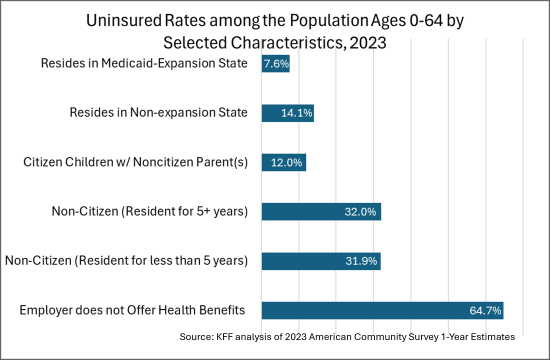
And, besides, being employed doesn’t mean you’re earning enough to pay for health insurance:
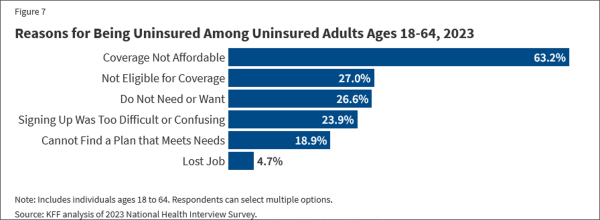
Note also that a quarter of the uninsured don’t want or feel they need health insurance. I’m guessing that most of that group are relatively young adults, healthy and willing to take their chances. Perhaps they’d change their minds if health insurance wasn’t so expensive.
—
Next: How would mandatory coverage work?